
Does cultured stone hold back the soil itself?
Cultured stone veneer does not serve as the retaining structure. The manufactured facing is attached to a suitable backing wall, while that wall and its foundation carry the soil pressure. A decorative stone product cannot make an unsuitable wall safe simply by covering it. Confusing the two can lead to a quote that leaves out the most important construction work. We discuss the structural wall and the finish as related but separate parts of the scope. For a new installation, that means planning both from the beginning. For an existing wall, the first question is whether the backing is sound and suitable for the proposed veneer, rather than which colour will hide the surface best.
Where does a cultured stone finish make the most sense?
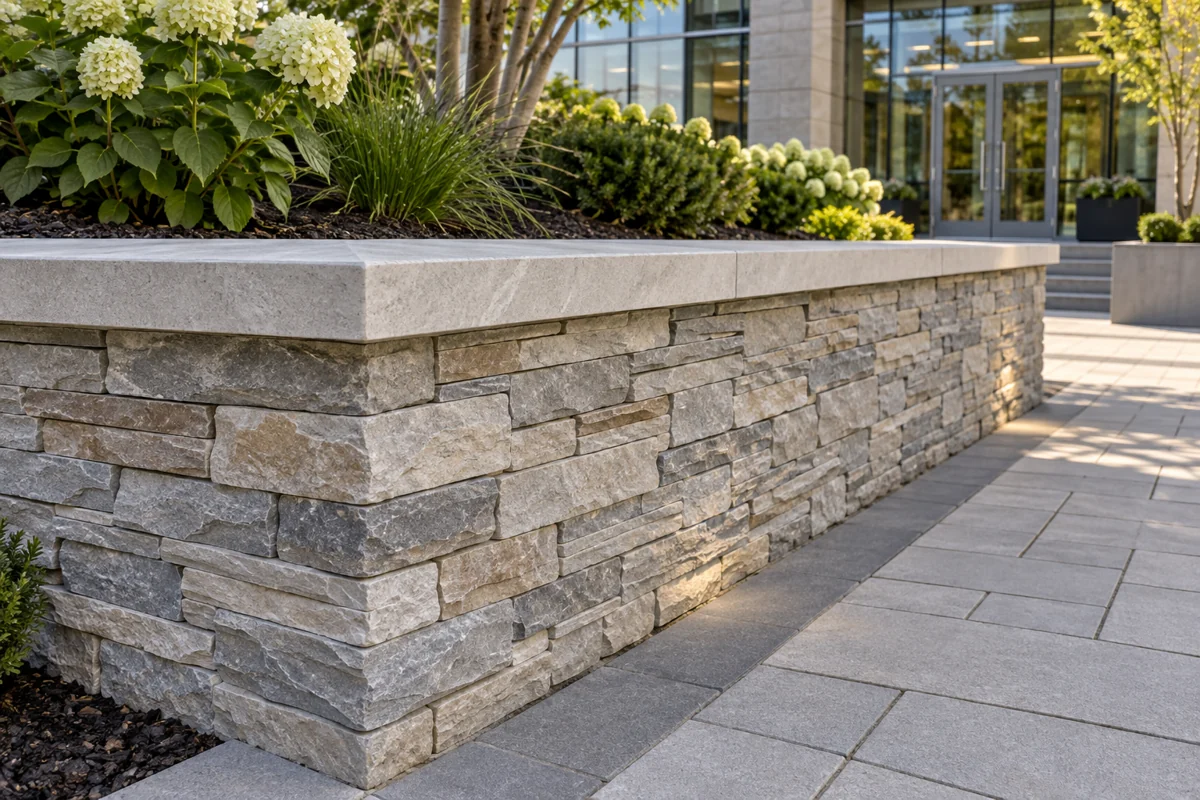
A cultured stone finish makes sense where the wall is an important part of the property's visible architecture and its exposure suits the product. A residential courtyard, front entrance or commercial landscape can benefit from a finish that relates to nearby masonry. The stone pattern, corner details and cap should look deliberate at the scale of the wall. A random selection based only on a small sample can appear busy across a long elevation. We consider the viewing distance, surrounding materials and wall proportions before choosing a profile. Highly wet locations or other demanding exposures need careful product review. The finished appearance should never take priority over whether the installation conditions meet the manufacturer's requirements.
Why are moisture details especially important behind veneer?
Moisture details are important because water can affect the bond, backing and appearance of a veneer installation. A retaining wall has damp soil on one side and weather exposure on the other. That is different from simply applying stone to a sheltered decorative surface. Water control at the top, behind the retaining structure and around terminations must be considered together. Persistent wetting can contribute to staining, efflorescence or damage, and freezing conditions can make poor detailing more consequential. We review the selected product's installation requirements and the backing condition before work proceeds. Appropriate drainage and compatible materials are part of the wall assembly, not optional finishing extras added after visible problems develop.
Can cultured stone be added to an existing concrete wall?
Cultured stone may be added to an existing concrete wall when the structure, substrate and exposure are suitable for the chosen system. An inspection should look for movement, cracks, coatings, moisture and surface contamination that could affect the installation. A wall that is leaning or continuing to move needs a structural solution before a new face is considered. Covering distress can make future assessment harder while leaving the cause untouched. Surface preparation also needs to follow the manufacturer's method rather than an improvised adhesive choice. We distinguish a sound wall needing a new finish from a wall needing replacement. That distinction helps a homeowner or commercial manager avoid investing in an appearance upgrade on an unsuitable base.
How should corners, caps and ground clearances be finished?
Corners, caps and ground clearances should form a complete, compatible detail around the stone veneer. The cap helps protect the top of the wall, while edges and transitions determine where water can enter or collect. The chosen system may require specific clearances from soil or paving. Ignoring these details can leave an otherwise attractive face vulnerable at its most exposed points. We plan the finish around the actual wall shape, including steps, returns and nearby surfaces. Matching corner pieces and a carefully proportioned cap usually deserve attention before material quantities are finalized. The installation should follow current product instructions, with site-specific design resolving any conditions the standard details do not cover.
What should a cultured stone wall proposal separate clearly?
A cultured stone proposal should separate structural construction, substrate preparation and veneer finishing so the scope is easy to understand. For a new wall, excavation, footing, reinforcement, drainage and backfill may account for much of the project before any decorative stone is installed. For an existing wall, repairs and preparation need to be identified before the finish price is meaningful. Ask how caps, corners, removal of old finishes and restoration are handled. Share the location, wall dimensions, existing material and preferred appearance when requesting an estimate. If the objective is the look of large natural blocks rather than a masonry facing, our armour stone page offers a useful comparison. The two approaches create different structures and different visual results.
Discuss your project
Share the location, scope, timing, and any site conditions that may affect the work.