
Which cottage slopes are suitable for retaining walls?
A cottage slope may suit a retaining wall when there is a clear need for a level area and enough space for a properly designed structure. A terrace near the building, a sloped parking area or a change in grade along a path may be reasonable starting points. A steep bank, wetland edge or eroding shoreline needs a more specialized assessment. Installing a landscape wall without understanding the larger slope can leave the underlying problem unresolved. We begin with the intended use and the location of the work. The wall should support a practical property improvement, with the soil, slope and water conditions assessed before a material or wall height is selected.
Why is armour stone often considered for cottage properties?
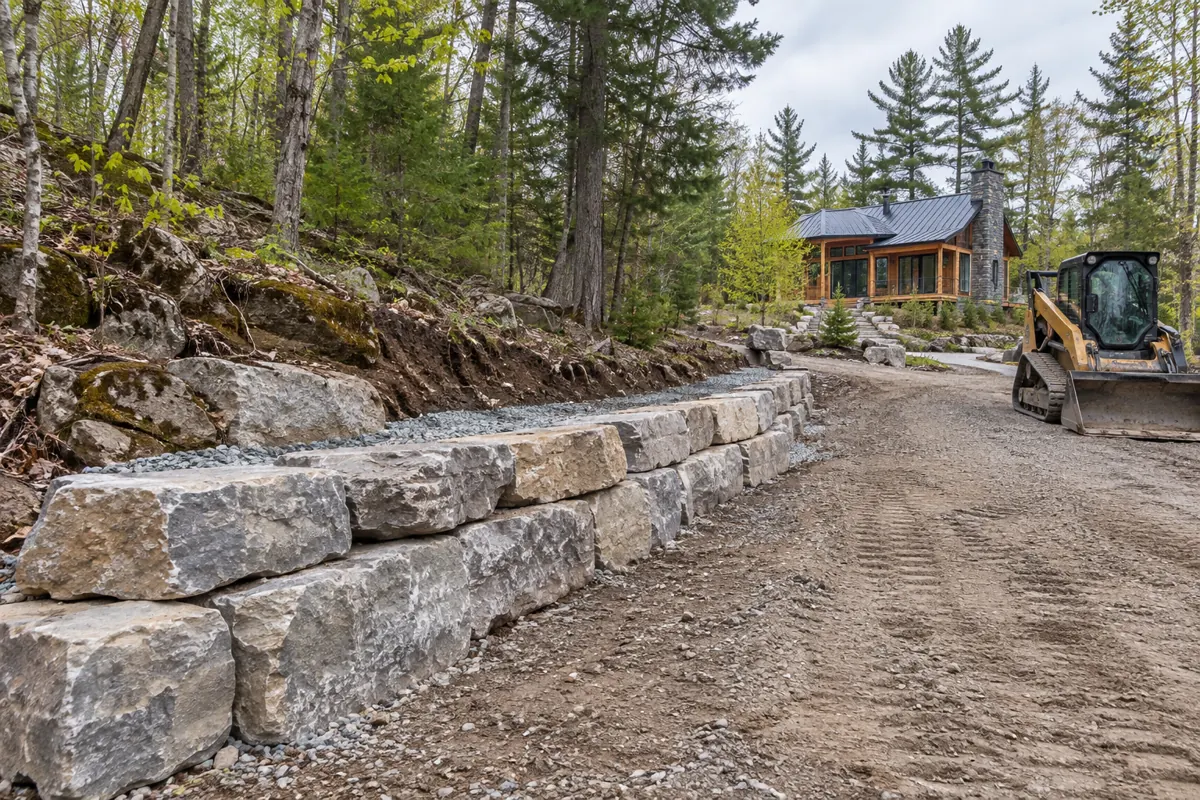
Armour stone is often considered because its rough natural face fits wooded landscapes and substantial rural properties. The large blocks can form a clear boundary between lawn, planting and sloping ground without introducing a small repetitive masonry pattern. However, natural appearance does not remove the need for design. Stone weight, bearing, base preparation and drainage still determine whether the wall is appropriate. Choosing the largest available stones can also create unnecessary access problems. We compare the desired appearance with the space and equipment the property can accommodate. A more compact block or concrete solution may be worth considering where a cottage sits close to a boundary or where the access lane restricts delivery.
What changes when a wall is near water or a wetland?
A wall near water or a wetland needs an early review of the applicable conservation authority and municipal requirements. Shoreline work, grading and fill placement can fall within regulated activities, even when the intended improvement looks small. The relevant authority depends on the property location. Permission for an upland landscape project should not be assumed to cover work at the water's edge. Starting without confirmation can delay the project and may disturb sensitive ground or water flow. We identify these questions before construction planning advances. This service page does not promise seawalls, in-water work or shoreline protection under a routine retaining wall scope. Those conditions must be assessed separately with the appropriate approvals.
How do narrow lanes and private services affect construction?
Narrow access lanes and private services can control how a cottage wall is built. A truck may reach the property entrance but still be unable to unload near the work. Soft shoulders, tight turns, overhead branches and limited turning space can restrict equipment. Wells, septic systems and buried private lines also need to be identified and protected. Driving heavy machinery over an unsuitable area can damage infrastructure that is unrelated to the wall. We ask about the route from the public road to the construction area, not only the final worksite. Utility locates and any separate private-line locating needs should be resolved before excavation. These steps help establish a realistic handling and staging plan.
How should seasonal water and property use influence the wall?
Seasonal water and property use should influence the drainage plan and construction sequence. A cottage visited mainly in summer may still face spring snowmelt, heavy rain and long periods without observation. Water can travel down an access lane or collect behind a terrace while the property is vacant. A wall that depends on frequent improvised maintenance is a poor match for that pattern of use. We consider runoff paths and the ability to inspect drainage after the project. Construction timing also needs to reflect ground conditions and any site-specific restrictions. The aim is a wall and surrounding grade that work with the property throughout the year, not simply an attractive summer view.
What should cottage owners send with an estimate request?
A cottage estimate request should include the property community, approximate wall dimensions and a description of the intended use. Explain how close the work is to water, a wetland, the cottage, a septic area or an access lane. If there are existing plans, surveys or approval documents, mention them so their relevance can be discussed. Do not assume that a pin on a map describes machine access. Note narrow gates, steep drives and places where trucks cannot turn around. For a replacement, describe movement or erosion and when it becomes most visible. These details help determine the next assessment steps and whether the location fits the service area before a detailed construction proposal is prepared.
Discuss your project
Share the location, scope, timing, and any site conditions that may affect the work.